
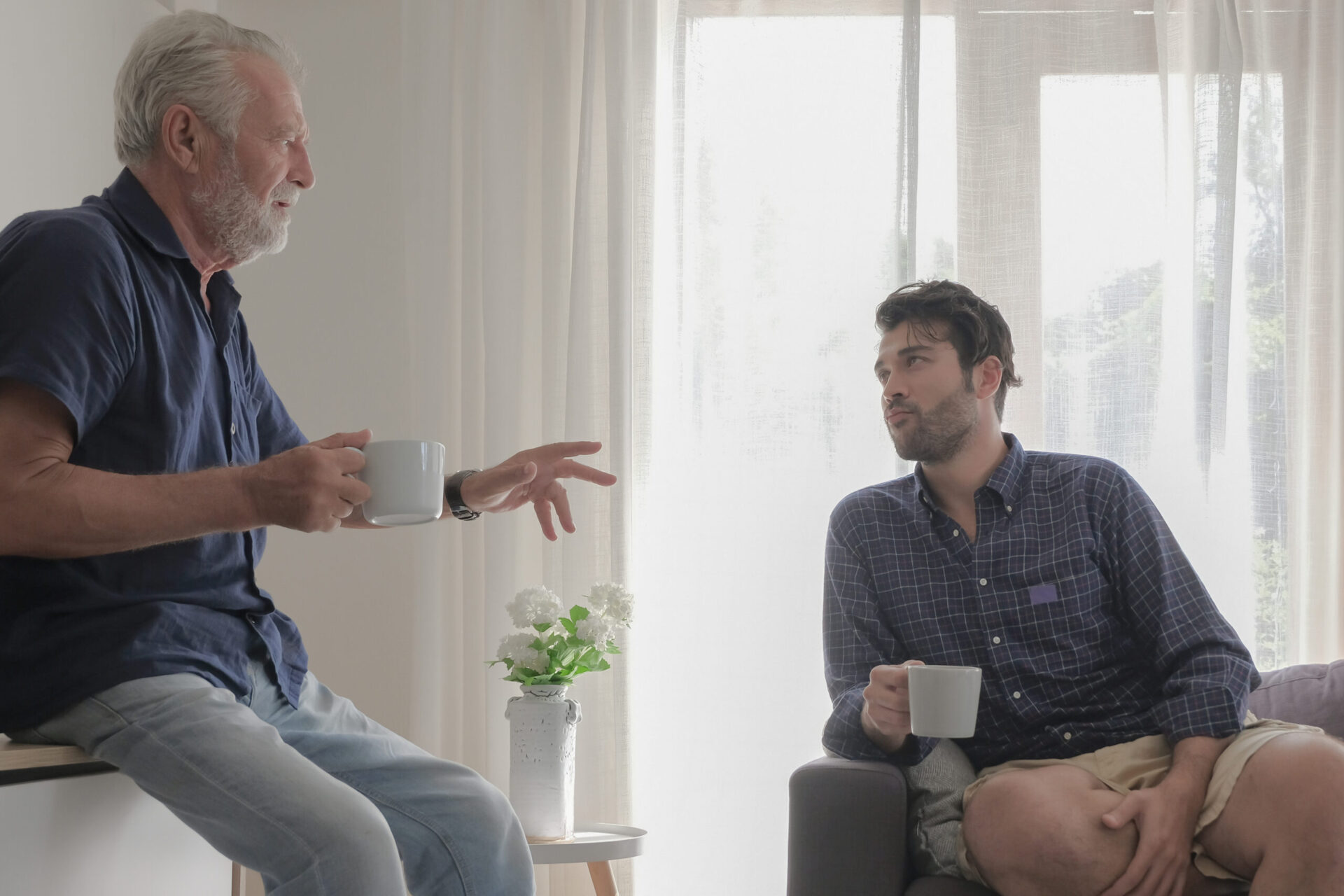
When Safety Conversations Feel Personal
If you are an older adult, you may have noticed something changing in conversations with your kids. They ask more questions about stairs. About the bathroom. About whether you still go down to the basement.
It can feel uncomfortable. Even threatening.
Here are some perspectives we have gathered from older adults who want to keep their homes safe and their kids reassured, without giving up control.
Acknowledge Their Worry, Not Their Judgment
When adult children bring up safety, it is usually coming from love, not criticism. Even if it feels intrusive, a calm response goes a long way.
You might say:
“I know you are just looking out for me, and I appreciate that.”
Most falls happen at home. According to the Public Health Agency of Canada, falls are the leading cause of injury-related hospitalizations among older adults. That does not mean you are fragile. It means homes need to evolve as we do.
A simple acknowledgment can completely change the tone of the conversation.
Show That You Are Already Thinking Ahead
The best way to avoid being told what to do is to take the lead. Mention that you have already been thinking about safety and making small changes.
For example:
“I have noticed that the back steps feel a bit steep. I have been meaning to look into a second railing or something with more grip.”
When you take initiative, the tone shifts. It becomes collaborative instead of corrective.
Small adjustments often make a big difference. Better lighting. A second handrail. A grab bar that blends into the bathroom instead of standing out. These are not dramatic changes. They are practical ones.
Invite Their Input on Your Terms
If you are open to suggestions, let them know. But set boundaries.
Try:
“I am okay with hearing your ideas, but I would like to move at a pace that works for me.”
Or:
“Why don’t we walk through the house together and see what we both notice?”
A walkthrough feels different than a lecture. It creates shared observation instead of tension.
Frame Safety as a Shared Concern
Let them know it is not just about you. You care about their peace of mind too.
You can say:
“If a few changes make you less worried when I do not pick up the phone right away, that is worth looking into.”
Even mainstream medical institutions treat basic home upgrades as common sense. Johns Hopkins Medicine includes good lighting, securely mounted grab bars, and clear pathways in its home safety guidance.
These are not extreme measures. They are practical precautions that support independence.
Do Not Be Afraid to Say No
Not every suggestion will make sense for your lifestyle or preferences. And that is okay.
You might say:
“I hear you, but that change does not feel right for me right now. I would rather focus on the ones that actually help me day to day.”
You are allowed to prioritize what feels useful and reasonable.
Independence does not disappear just because safety is discussed.
Consider Outside Input if It Would Help
Sometimes it helps to bring in a perspective that is not emotionally loaded, especially if the conversation keeps circling back to the same concerns.
That does not have to mean “bringing someone in” immediately. Outside input can take different forms.
A Health Professional
An occupational therapist, physiotherapist, or other care provider can sometimes offer insight based on how someone actually moves through their day. They can assess mobility, transfers, and functional needs in ways that family members may not be trained to see.
A Trusted Contractor or Handyperson
If the concern is about stairs, railings, lighting, bathrooms, or entryways, speaking with someone who understands the home itself can help ground the conversation in what is realistically possible.
Sometimes just understanding options reduces tension.
A Practical Home Safety Checklist
Some families benefit from working through a neutral checklist together. It shifts the conversation from opinion to observation.
A Home Safety Assessment
A home safety assessment is one option among many. It focuses specifically on the environment, not on diagnosing a person or declaring a stage of life.
It looks at things like:
• Trip hazards
• Lighting levels
• Railings and handholds
• Bathroom setup
• Clear pathways
• Entry and exit safety
It is not meant to solve a difficult family conversation. It is not a verdict on independence. It is simply a structured way to notice environmental risks and talk about priorities in a practical way.
Some families use the report to guide small DIY changes. Others use it to plan improvements gradually over time. Some decide to move ahead with more substantial safety upgrades or coordinated installations once priorities are clear. And for many, it simply serves as a neutral starting point for thoughtful next steps.
If you would like to understand what that process involves, you can read more about our Home Safety Assessments here:
https://goodcompanyhome.com/home-safety-assessments/
Our role, when invited, is to look at the home itself and identify practical safety considerations. Nothing more, nothing less.
For Adult Children Reading This
If you are the son or daughter in this conversation, remember that independence is not just practical. It is emotional.
Start with curiosity instead of correction.
Ask:
“Is there anything in the house that feels harder than it used to?”
Focus on small, meaningful upgrades instead of dramatic overhauls. Lighting. Railings. Bathroom support. Entry safety.
The goal is not to win an argument. It is to preserve both safety and dignity.
It Is Still Your Home
At the end of the day, it is your decision.
The goal is not to turn your home into something unfamiliar. It is to stay comfortable, safe, and independent on your own terms.
You are the one living there. Let’s keep it that way.
If you are ready to explore safety improvements, want an environmental walkthrough, or simply need calm, professional input as part of a broader conversation, we are here to help.
Good Company provides home safety assessments, safety and accessibility installations, and ongoing maintenance in North York, Toronto, Vaughan, and Richmond Hill.
Call 416 894 1137 or connect here to schedule a conversation or learn more.
About the Author
Jesse Black-Allen is the founder of Good Company, a North York-based home safety and accessibility specialist serving Toronto, Vaughan, and Richmond Hill. He helps families and homeowners improve safety, functionality, and peace of mind through practical home assessments and professional handyman support.