
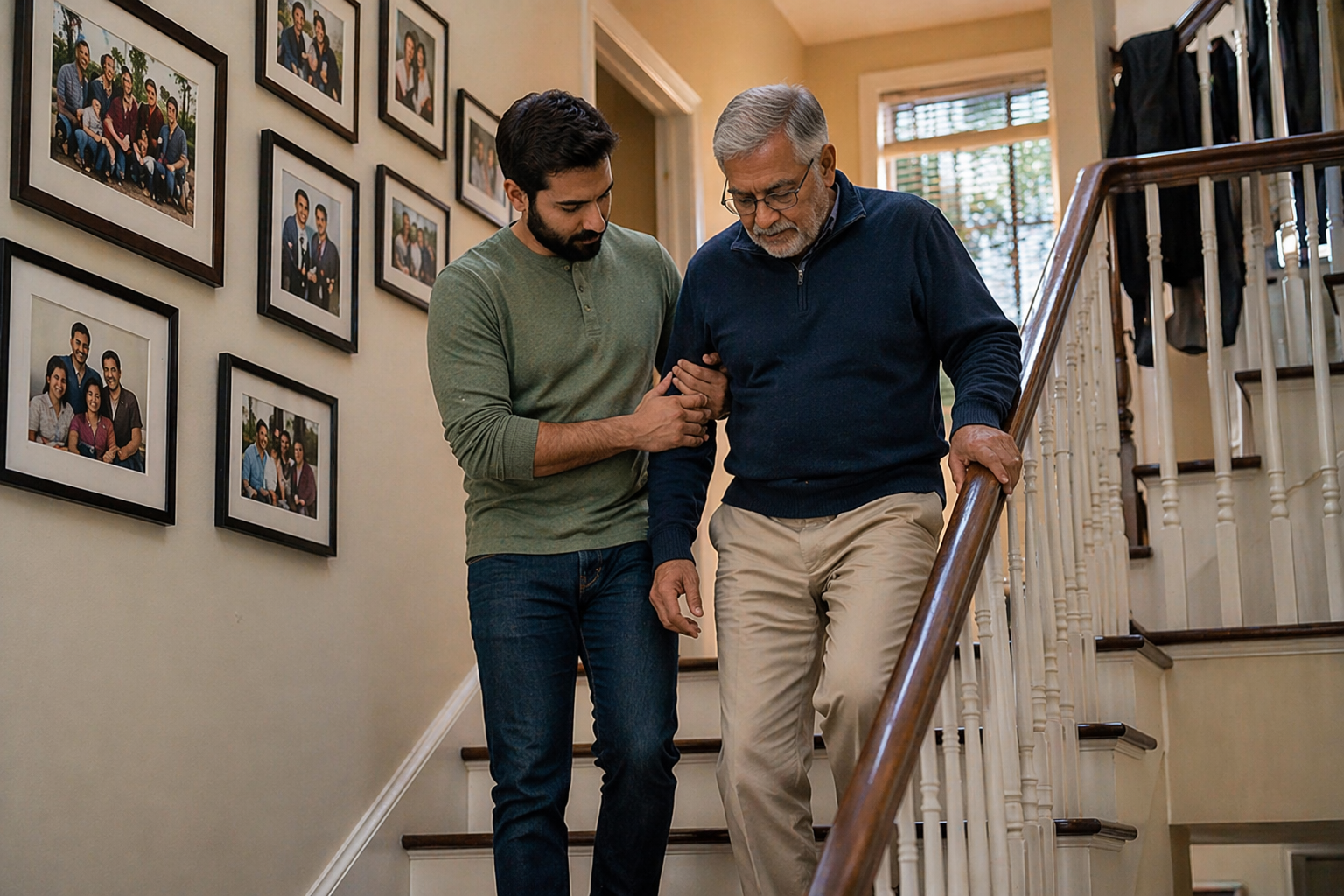
If you’re searching for the best home upgrades for aging parents, you’re probably trying to figure out where to start.
You’ve noticed a few things.
A missed step.
A hesitation getting in and out of the shower.
A hallway that feels a bit too dim at night.
It’s rarely one big issue. It’s a collection of small ones.
And that’s where people often get stuck.
Do you renovate?
Do you wait?
What actually makes the biggest difference?
The good news is this: most homes do not need a full renovation to become significantly safer. The best upgrades are often simple, targeted changes, done in the right order.
Start with a clear picture before making upgrades
Before choosing any upgrades, it helps to step back and look at the home as a whole.
Not just one room. Not just one issue. The entire flow of the space.
Many families find that starting with a structured walkthrough brings clarity quickly. A home safety assessment can help identify:
- where risk is highest
- what’s used most often
- and what changes will actually make a difference
From there, it becomes much easier to prioritize the right upgrades instead of guessing.
The best home upgrades often start with what’s already there
Some of the most effective improvements don’t involve installing anything at all.
They involve removing risk.
I’ve installed safety equipment in homes where the bathroom was a real concern, but the immediate risk was actually the landing on the stairs leading to it, crowded with shoes and coats.
Before anything else, the best upgrades often look like this:
- clearing pathways completely
- removing or securing throw rugs
- getting wires and cords out of walking areas
- reorganizing high-use spaces
This sounds simple. It’s not always easy.
Clutter, in particular, is often underestimated. It’s not just about tidying up. It can involve habits, routines, and sometimes resistance.
And in many cases, it’s not realistic for a busy son or daughter to take this on alone. There’s no reason to feel like you have to.
These are exactly the kinds of small but important jobs we handle regularly, often bundled into a single visit so meaningful progress actually gets made.
Try simple supports before committing to major upgrades
When people think about home upgrades, they often jump straight to renovation or permanent installations.
There’s a very effective middle ground.
Some of the best home upgrades for aging parents are simple supports that can be added quickly, including:
- shower benches or transfer benches
- bed rails or tension poles
- raised toilet seats or arm supports
- firm cushions to improve seat height
- clamp-on tub rails
These can make a meaningful difference right away, especially if you’re still figuring out what’s needed.
They also allow you to test what works before making bigger decisions.
And while some of these can be set up independently, many families prefer to have everything:
- sourced
- assembled
- and placed properly
At good company, we provide equipment delivery and set up in quick efficient visits.
Don’t overlook maintenance as a “hidden upgrade”
Not all upgrades are new features. Some are about restoring the home to a safe baseline.
Routine maintenance and basic upkeep play a bigger role than people expect:
- burned-out lights that don’t get replaced
- small repairs that pile up
- cleaning tasks that become harder to manage
When these things fall behind, risk increases gradually.
This is where ongoing support becomes one of the most valuable “upgrades” you can make. Something like a home maintenance plan helps keep the home safe over time, not just on one day.
Add communication and monitoring when needed
In some cases, safety isn’t just about the physical space.
It’s about what happens if something goes wrong.
Simple tools can help:
- fall detection devices
- emergency call buttons or watches
- basic smart home monitoring
These don’t replace physical upgrades, but they add reassurance, especially for family members who aren’t always nearby.
When major upgrades or renovations make sense
Some of the best home upgrades for aging parents are larger changes. But it’s important to be realistic about what that involves.
A full bathroom renovation, for example, can:
- take weeks or months
- disrupt daily routines
- require temporary living arrangements
Sometimes it’s absolutely worth it. Sometimes it’s not, at least not right away.
These decisions are often complex. They involve multiple family members, different opinions, and a lot of uncertainty. Because of that, people often delay everything.
In the meantime, smaller upgrades get missed.
If you’re considering a larger project like home renovations in Toronto, it’s worth asking:
- can we reduce risk now with smaller changes?
- can we narrow the scope?
- can we time the work to reduce disruption?
In many cases, a phased approach works better.
How to prioritize the best home upgrades
If you’re unsure where to start, focus on:
- High-use areas
Spaces used multiple times a day - Transitions
Entryways, stairs, getting in and out of the shower - Known problem spots
Places where something has already almost happened
This is exactly what a home safety assessment is designed to clarify, so you’re not guessing.
Common mistakes to avoid
A few things come up again and again.
Grab bars that aren’t properly anchored
This creates a false sense of security. Proper grab bar installation matters.
Waiting until something happens
Most upgrades are reactive. That’s understandable, but it means preventable risks remain.
Clutter being dismissed as “just clean up”
It’s often more complex than that.
Throw rugs and small trip hazards
Simple, but consistently overlooked.
Missed opportunities during renovations
Homes get updated without considering safety and accessibility at the same time.
What actually matters most
There are certain situations that stand out immediately.
- a rapidly changing condition without clear support
- clutter combined with mobility challenges
- high-use areas with obvious risks
For example:
- a laundry area down narrow stairs with no railing
- garbage and recycling areas outside with uneven or icy surfaces
- poorly lit entryways used daily
These are the areas where the right upgrades make the biggest difference.
Often, that means installing supports like handrails or improving visibility with lighting upgrades.
Bring in the right perspective early
One of the most valuable steps early on is understanding the person’s actual abilities and how they’re changing.
Occupational therapists can be very helpful here. When needed, I often suggest connecting with one and can provide referrals.
The goal is not just to upgrade the home, but to make sure the changes actually fit the person using it.
What the research shows
Falls are one of the most common and serious risks for older adults, and many happen at home.
- The Government of Canada highlights that simple changes like better lighting and removing tripping hazards can significantly reduce fall risk:
https://www.canada.ca/en/health-canada/services/healthy-living/your-health/lifestyles/seniors-aging-preventing-falls-around-your-home.html - The Public Health Agency of Canada emphasizes identifying everyday hazards early:
https://www.canada.ca/en/public-health/services/publications/healthy-living/safe-living-guide-a-guide-home-safety-seniors.html - The National Institute on Aging provides room-by-room guidance reinforcing the importance of small, targeted changes:
https://www.nia.nih.gov/health/falls-and-falls-prevention/preventing-falls-home-room-room
These all point to the same conclusion: the best home upgrades are often simple, practical, and done early.
A better way to approach this
If there’s one takeaway, it’s this:
You don’t need to renovate everything.
Start with:
- a clear understanding of the home
- a few high-impact changes
- and a plan for what comes next
From there, you can:
- install the right supports
- bring in ongoing help
- or plan larger upgrades more carefully
Related reading
- Helping aging parents stay safe at home
- Aging in place: a complete planning guide
- Planning ahead: making your home accessible for the future
- What to expect during a home safety assessment
- DIY vs professional home safety fixes: what’s worth outsourcing
If you’re not sure where to start
Most of the time, it doesn’t take long to identify the most important upgrades.
And for many families, it’s simply easier to have someone come in, take a look, and help get the first few things done properly.
If you ever want a second opinion or a place to start, I’m always happy to talk it through.
About the Author
Jesse Black-Allen is the founder of Good Company, a North York–based home services business focused on safety, accessibility, and practical support at home. He works with older adults, families, and busy homeowners across Toronto, Vaughan, Richmond Hill, and Etobicoke to make homes safer and easier to live in, without unnecessary complexity.
Jesse’s approach is simple: start with what matters most, take care of the small things properly, and build from there. His work ranges from home safety assessments and accessibility installations to ongoing maintenance and hands-on support.
If you’re trying to figure out what changes will actually make a difference, Jesse is always open to a conversation.