
When a baby comes into the world, most parents instinctively start scanning their home for hazards. Outlets are covered, gates go up at the stairs, furniture is anchored, and sharp corners are padded. We accept these changes without hesitation because we want to protect children as they explore, grow, and test boundaries.
What’s interesting is that many of us stop thinking this way once our children are older. But the truth is, our homes need to adapt throughout our entire lives. Safety isn’t just for toddlers. It is for anyone who may be more vulnerable at different times.
The journey we’re all on
Life brings change. We may face temporary injury, long-term illness, mobility challenges, or the natural changes that come with aging. Each stage of life reshapes how we interact with our environment, and our homes should reflect that. Just as baby gates protect toddlers from falls, sturdy railings, better lighting, and small layout changes can protect older adults from the very same risks.
The hazards do not disappear. Our relationship to them changes.
Childproofing as the first step
Childproofing a home is really just one chapter in a bigger story of universal safety. Securing cabinets, adding locks, installing gates, and anchoring heavy furniture are all steps that make a home safer for kids. But they also introduce a way of thinking. We adapt the environment to the people who live there.
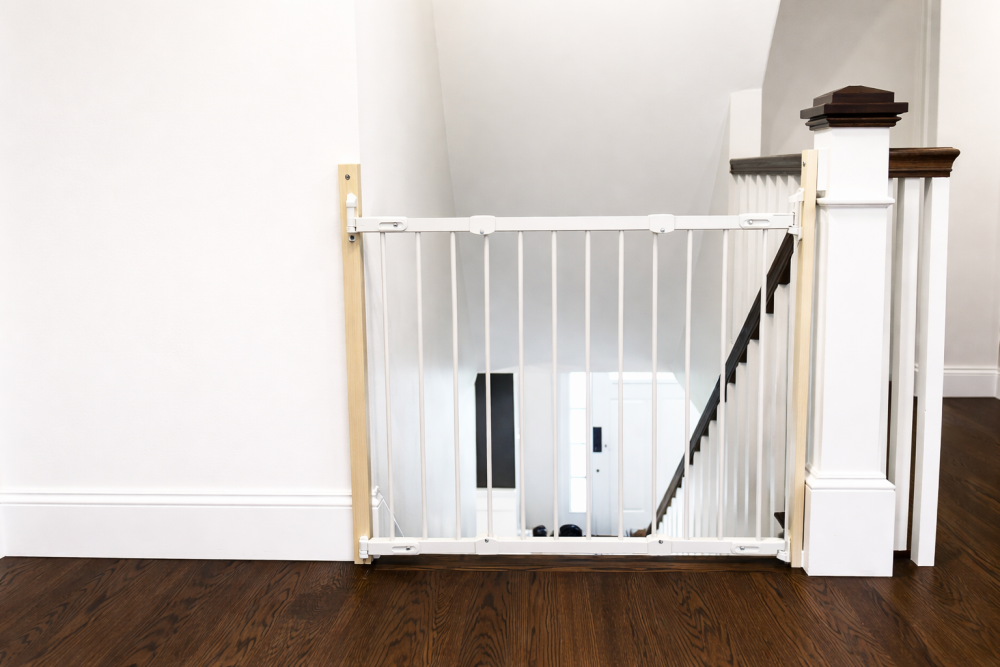
A properly installed baby gate at the top of stairs is a good example. It is not just about putting a barrier in place. It involves choosing the right type of gate for the location, mounting it securely into framing or appropriate anchors, and making sure it opens, closes, and latches reliably every time. Done properly, it becomes part of the home. Done poorly, it can create a false sense of security.
Guidelines like those from Health Canada reinforce this. For example, hardware-mounted gates are recommended at the top of stairs because pressure-mounted gates can fail under force or shift over time. You can review their guidance here:
https://www.canada.ca/en/health-canada/services/infant-care/safety-gates.html
The same principle applies to anchoring furniture, installing cabinet locks, or managing cords and access points. These are small details, but they matter. They are most effective when installed thoughtfully, with attention to how the home is actually used day to day.
What good installation looks like
A big part of childproofing is not just what you install, but how you install it.
In practice, that means:
- Gates that are securely mounted, level, and positioned to avoid gaps or trip points
- Hardware installed into solid backing wherever possible, not just drywall
- Cabinet locks that are consistent and easy for adults to use but secure for children
- Furniture anchoring that actually holds under force, not just light contact
- Products that fit the home, rather than forcing the home to adapt awkwardly
It also means thinking beyond individual products. Sightlines, lighting, flooring transitions, and everyday habits all play a role in safety. A home walkthrough often reveals small risks that are easy to miss.
How Good Company can help
At Good Company, we approach childproofing as practical, hands-on work. Our focus is not just on recommending products, but on installing them properly and making sure they work in the context of your home.
Our trained, insured team can:
- Install baby gates at the top and bottom of stairs with secure mounting
- Add cabinet locks, outlet covers, and other protective hardware
- Anchor furniture and TVs using proper anti-tip systems
- Improve lighting in stairways, hallways, and key transition areas
- Walk through your home and identify hazards you may not have noticed
We take care to install everything cleanly and securely, especially on finished surfaces. That includes proper fastening, careful drilling, and leaving the space tidy and functional when we are done.
And because we are already working in homes every day, we are able to connect these small improvements into a bigger picture. Childproofing is often the starting point, but the same approach carries forward into fall prevention, accessibility upgrades, and ongoing maintenance.
A trusted network of specialists
While our own team handles most childproofing and safety installations, we also maintain a trusted network of specialists, including certified childproofers. For families who want a more comprehensive plan or highly specialized solutions, we can help coordinate that.
At the same time, we remain hands-on. We can source products, handle installation, and make sure everything is set up properly so you are not left figuring it out on your own.
Safety is for everyone
It is easy to see the value of childproofing when children are young. What is harder, but just as important, is remembering that safety does not stop there. Our homes should adapt with us, supporting not just our kids but ourselves, our parents, and anyone else who comes through the door.
Good Company is here to help you think about safety not as a one-time project, but as an ongoing practice. From childproofing to aging in place, we make homes safer, more functional, and easier to live in at every stage.
Additional reading
- https://www.canada.ca/en/health-canada/services/infant-care/safety-gates.html
- https://www.canada.ca/en/public-health/services/publications/healthy-living/make-your-home-safe-for-child-nobodys-perfect.html
- https://www.canada.ca/en/health-canada/services/consumer-product-safety/reports-publications/consumer-education/your-child-safe/is-your-child-safe.html
- https://caringforkids.cps.ca/handouts/safety-and-injury-prevention/keep_your_young_child_safe
About the Author
Jesse Black-Allen is the founder of Good Company, a North York-based home safety and accessibility specialist serving Toronto, Vaughan, and Richmond Hill. He helps families and homeowners improve safety, functionality, and peace of mind through practical home assessments and professional handyman support.