
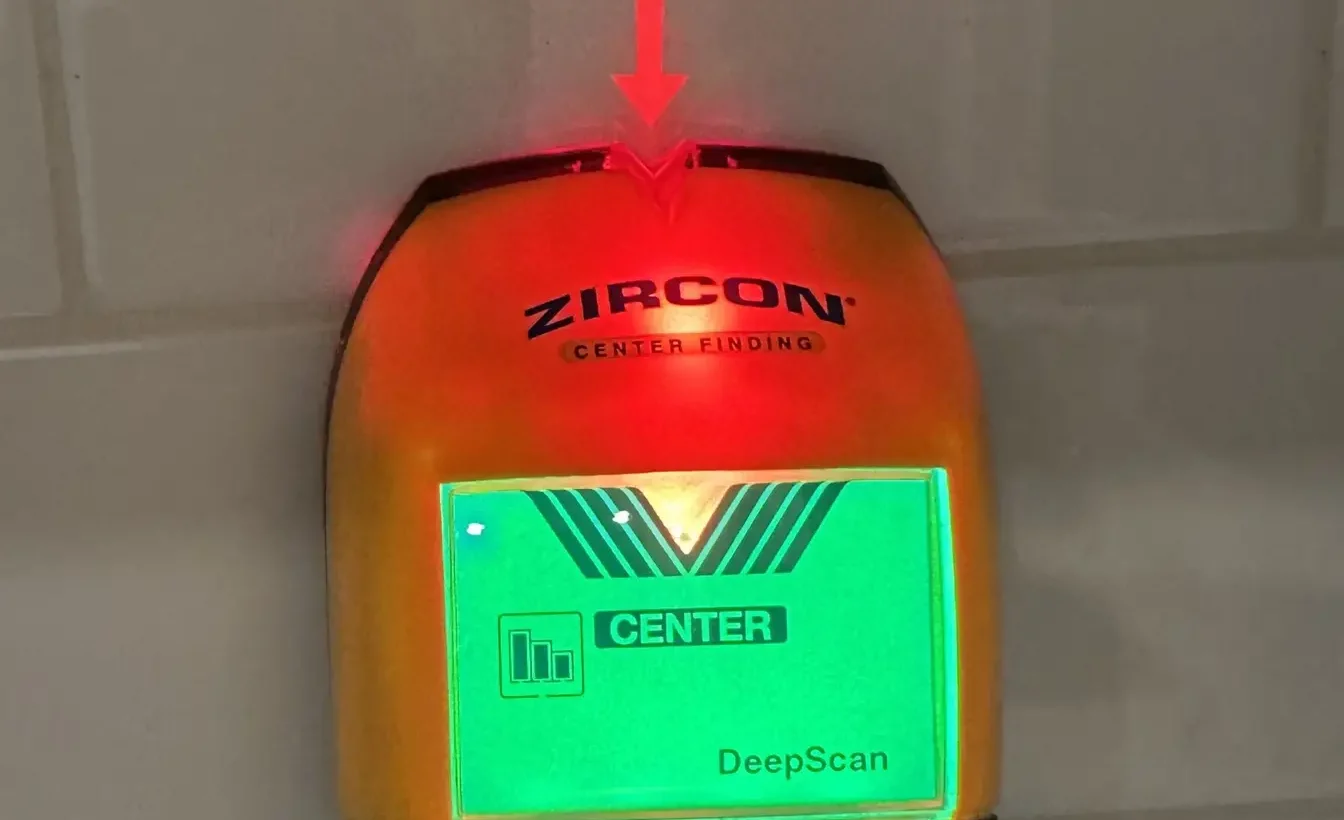
When people ask how I approach safe wall mounting, especially in bathrooms and kitchens, I usually smile and hold up my stud finder. Then I add the honest part: this tool helps, but it isn’t magic. It’s one source of information among many.
The photos below show a Zircon scanner doing its best on three very different surfaces: marble tile, glossy ceramic tile, and plain drywall. Each surface behaves differently, and each creates its own challenges when you’re trying to mount something securely. For work like grab bars, handrails, bathroom accessories, shelving, or anything load-bearing, you need to know what’s behind the surface and how to anchor into it safely.
(A separate blog post will cover safe drilling, choosing anchors, and protecting surfaces.)
Drywall
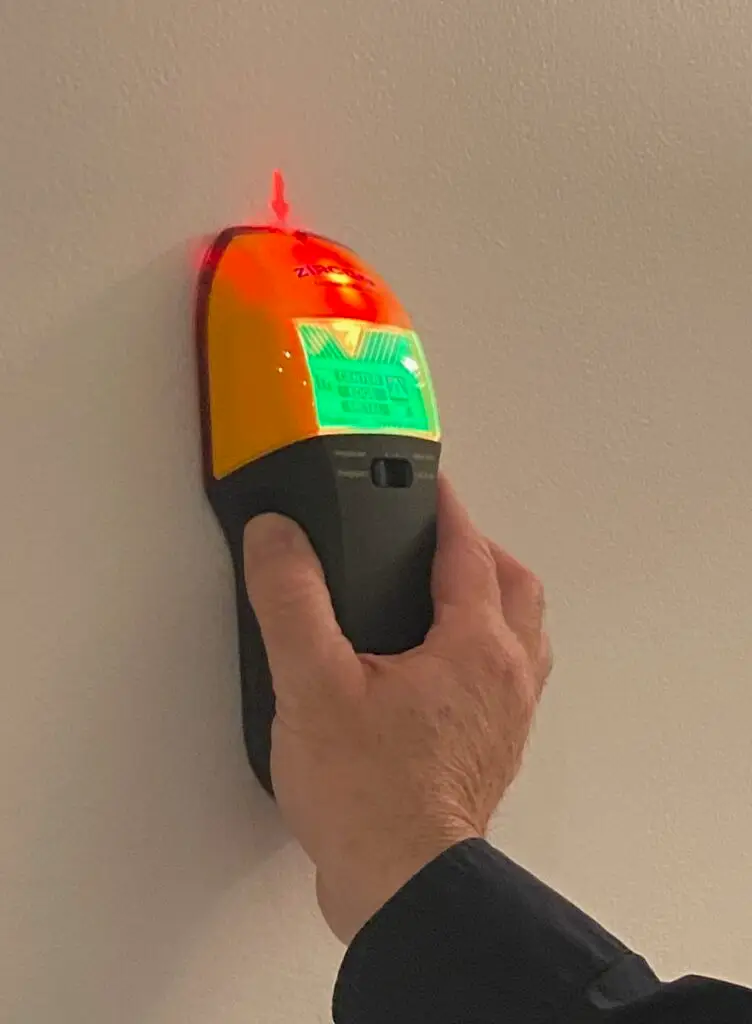
Drywall is the easiest surface for a stud finder. It’s thin, predictable, and usually installed over studs spaced 16 or sometimes 24 inches apart. On a surface like this, the scanner is doing exactly what it was designed to do. You can usually trust the edge and center readings if you move slowly and scan a couple of times.
Even here, though, you need to think about what else might be running through the walls. Electrical lines often run vertically from outlets and switches. Plumbing may appear in shared walls between bathrooms. Gas lines can run to fireplaces or stoves. So even drywall needs a bit of thought, just not nearly as much as tile or stone.
Tile (ceramic or porcelain)
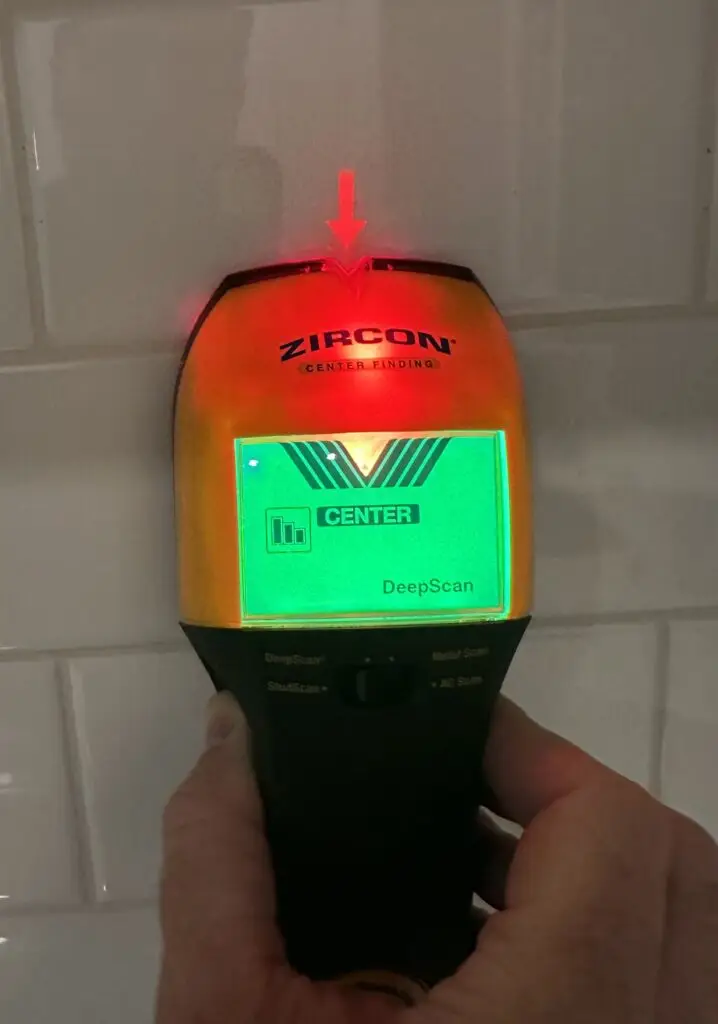
Tile complicates things. Glossy ceramic and porcelain reflect the scanner’s signals and can make readings glitchy or wide. Behind the tile, you often have a layer of cement board or drywall, and behind that, the usual mix of studs, wiring, and plumbing.
This is where a scanner isn’t enough on its own. You have to understand how walls are built:
- Water lines are almost always near sinks, showers, tubs, or toilets.
- Electrical wires tend to run vertically from switches or horizontally at consistent heights.
- Gas lines will be near stoves, furnaces, or boiler rooms.
- Drain pipes appear in kitchen walls, bathroom walls, laundry rooms, and wherever sinks are on both sides of the same wall.
- What’s on the other side of the wall matters a lot. A kitchen backed by a bathroom is full of pipes. A bathroom backed by a closet is usually safer.
So even if the tool lights up and says “CENTER,” you still have to scan from multiple directions, think about the house layout, and ask yourself whether a stud makes sense in that location.
It’s detective work. The scanner gives clues, not final answers.
Thick stone finishes (marble, quartz, large-format tile)
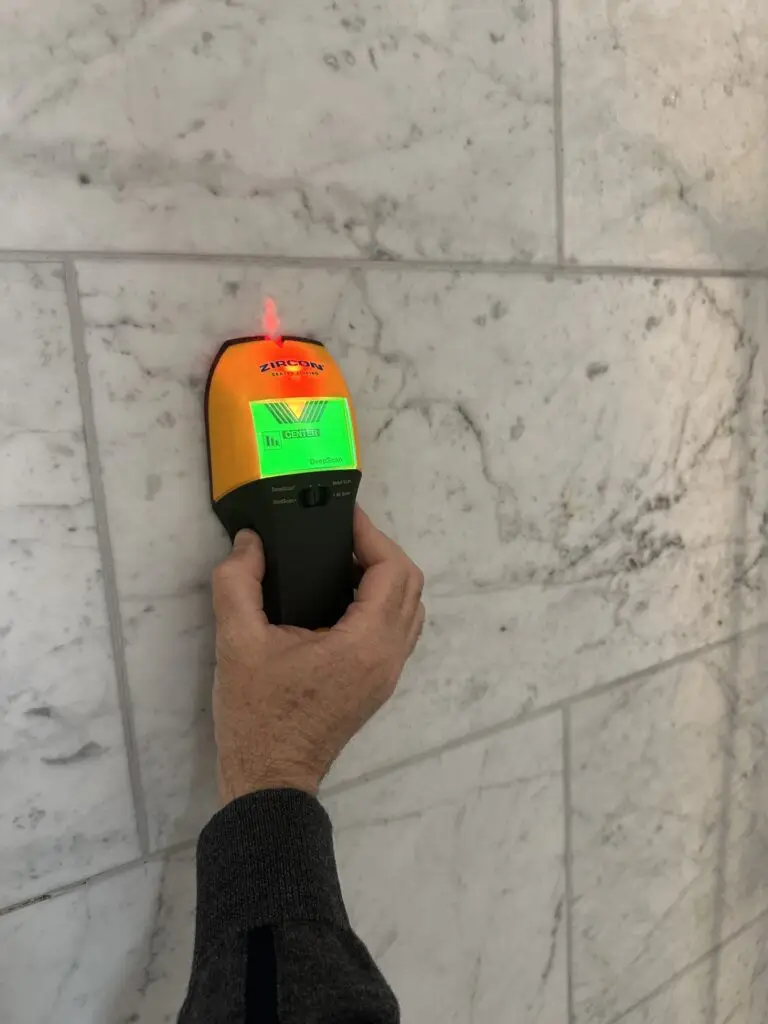
This is where things get really interesting. Many bathrooms have marble or engineered stone that’s ½ inch thick or more. Under that, there’s often another ½ inch of drywall, plus adhesive and compound. So before you even reach the air cavity inside the wall, you may be looking through more than an inch of dense, inconsistent material.
That thickness makes scanner readings slower and less precise. It also hides a lot of things you need to think about:
- Water supply lines (hot and cold)
- Drain pipes
- Vent pipes
- Electrical wiring
- HVAC ducts in some layouts
A quick note about vent pipes, because many people confuse them with heating vents. A vent pipe is part of the plumbing system. Every drain (sinks, showers, tubs, and toilets) needs air behind it so water can flow smoothly. That air comes from a vertical vent pipe that often runs straight up through the wall and out the roof. These pipes sit exactly where you don’t want to drill, especially near tubs or vanities.
Bathrooms are full of these surprises. And the consequences of a mistake can be serious. For example:
- Drilling into a water line can create a slow leak that shows up first in the ceiling of the unit below.
- Damaging a drain pipe can cause smells or moisture that take days to appear.
- Cracking or chipping a marble tile can be extremely expensive to repair, especially when the client no longer has spare tiles.
So the real goal isn’t just to find a stud. It’s to avoid damaging something expensive, hidden, or essential.
Do things always need to go into a stud?
No, not always, but hitting a stud is almost always the best option.
Here are the real-world situations:
Best case: directly into a stud
This is ideal for grab bars, handrails, and anything supporting real weight.
Next best: solid blocking
Some renovations (not many) include extra wood inside the wall exactly for grab bars or accessories.
Reliable alternative: proper anchors
When you can’t hit a stud, there are excellent anchors for tile, drywall, and stone.
But they must be used correctly and chosen for:
- the wall material
- the weight they need to hold
- the direction of the load
- the thickness of the surface
A correct anchor in the right material can hold enormous force. A poorly chosen one can fail the moment someone leans on it. Skill and judgment matter here.
Finding what’s underneath is only half the battle
Even if you find a stud (or identify a safe spot) the next challenge is mounting equipment without damaging the finishes. Kitchens and bathrooms often have:
- stone
- glass tile
- polished ceramics
- intricate grout lines
- heating elements behind the wall
- waterproofing membranes
Breaking any of these can be costly.
I often spend more time planning, locating safe areas, and marking out stud positions than actually drilling or installing the hardware. Clients don’t always see that part, but it’s the foundation of a safe, clean, professional job.
What’s next
In another blog post, I’ll go into the practical side:
- How to drill safely into stone, tile, and drywall
- How to avoid cracking tile
- How to use diamond bits
- How to choose the right anchors
- When you should avoid drilling altogether
- How to work safely around plumbing and wiring
Safe wall mounting isn’t just about finding structure. It’s about protecting the home, avoiding hidden hazards, and using the right techniques for the surface you’re working with. If you’re planning grab bar installation in a tiled or stone bathroom, careful locating and mounting is critical to avoid hidden plumbing and ensure long-term safety.
If you need help planning an installation or locating safe mounting points, I’m always glad to take a look and talk through the options.
Based in North York, Serving all Toronto, Vaughan, and Richmond Hill.
One call you can count on.
416-894-1137
About the Author
Jesse Black-Allen is the founder of Good Company, a North York-based home safety and accessibility specialist serving Toronto, Vaughan, and Richmond Hill. He helps families and homeowners improve safety, functionality, and peace of mind through practical home assessments and professional handyman support.