
For a long time, grab bars have had an image problem. People hear the term and picture institutional bathrooms, stainless steel rails, and a clear signal that something has “gone wrong.” That stigma keeps a lot of perfectly capable people from installing one of the simplest, most effective safety upgrades you can make in a home.
As part of our handyman services in Toronto, we regularly install grab bars and other subtle safety upgrades that blend into the space rather than stand out.
The truth is that grab bars have evolved. Today’s grab bars in Toronto homes can look intentional, modern, and well designed. More importantly, they make everyday life safer and easier for almost everyone, not just seniors or people with mobility challenges.
Why Grab Bars in Toronto Homes Aren’t Just for “Later”
Most falls don’t happen because someone is frail. They happen during normal life. Wet feet stepping out of the shower. A moment of dizziness. Carrying laundry. Reaching, twisting, or moving just slightly off balance.
Bathrooms are especially risky. Smooth surfaces, water, soap, and awkward movements are a perfect storm. A well placed grab bar gives you something solid to rely on in the split second when balance is compromised. That support can prevent an injury that changes everything.
According to the Centers for Disease Control and Prevention, falls are a leading cause of injury, and many happen at home, especially in bathrooms.
But it’s not just bathrooms. Grab bars can make sense near front steps, in hallways, beside a bed, or anywhere people regularly transition from sitting to standing. Many Toronto homeowners are installing grab bars proactively, not reactively.
Modern Grab Bars Toronto Homeowners Actually Like
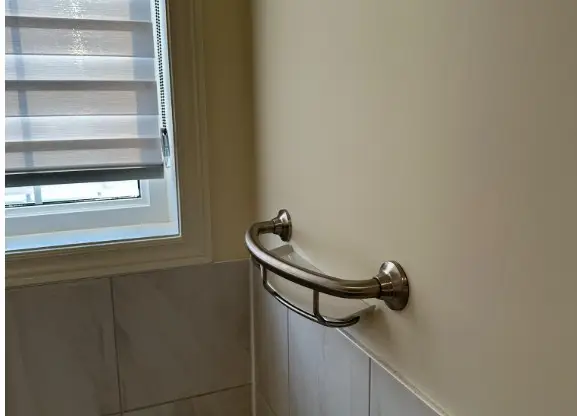
Modern grab bars no longer need to look medical.
You can now find options that:
• Match finishes like brushed nickel, matte black, or chrome
• Double as towel bars or toilet paper holders
• Have clean, minimalist profiles
• Blend naturally into contemporary bathrooms
When installed thoughtfully, most people won’t even register them as “grab bars.” They’ll just see a well designed space.
That shift matters. Grab bars in Toronto are increasingly viewed as smart design rather than emergency retrofits.
Everyone Benefits, Even If You Feel Steady Now
Grab bars aren’t about predicting decline. They’re about acknowledging reality.
Guests age. Parents visit. Injuries happen. People get sick. Pregnancy affects balance. Even fatigue can make a space feel less forgiving.
A grab bar is quiet insurance. It sits there doing nothing most of the time, until the moment it matters.
Many clients who call us for grab bars in Toronto say the same thing afterward:
“I didn’t realize how nice it would be to have that there.”
Professional Grab Bar Installation in Toronto Matters
A stylish grab bar that isn’t properly anchored is worse than useless. These are safety devices, not decorative accessories. They must be secured into framing or with proper structural anchors, and positioned at the correct height and angle.
Placement matters. A grab bar that looks good but isn’t where your hand naturally reaches won’t help when you need it.
This is where professional grab bar installation in Toronto really pays off. We assess how the space is actually used before installing anything, often as part of a broader home safety review.
A Small Upgrade With Real Impact
Grab bars are one of the few upgrades that check every box:
• Affordable compared to renovations
• Quick to install
• Subtle when chosen well
• Immediately useful
• Proven to reduce fall risk
They don’t signal loss of independence. They support it.
If you are considering grab bars in Toronto and want them to look intentional, feel solid, and truly improve your home, it can often be handled in a single visit.
Sometimes the best upgrades are the ones you barely notice, until the day you’re very glad they’re there.

You can contact us here to talk through your space and what would make the most sense.
About the Author
Jesse Black-Allen is the founder of Good Company, a North York-based home safety and accessibility specialist serving Toronto, Vaughan, and Richmond Hill. He helps families and homeowners improve safety, functionality, and peace of mind through practical home assessments and professional handyman support.