
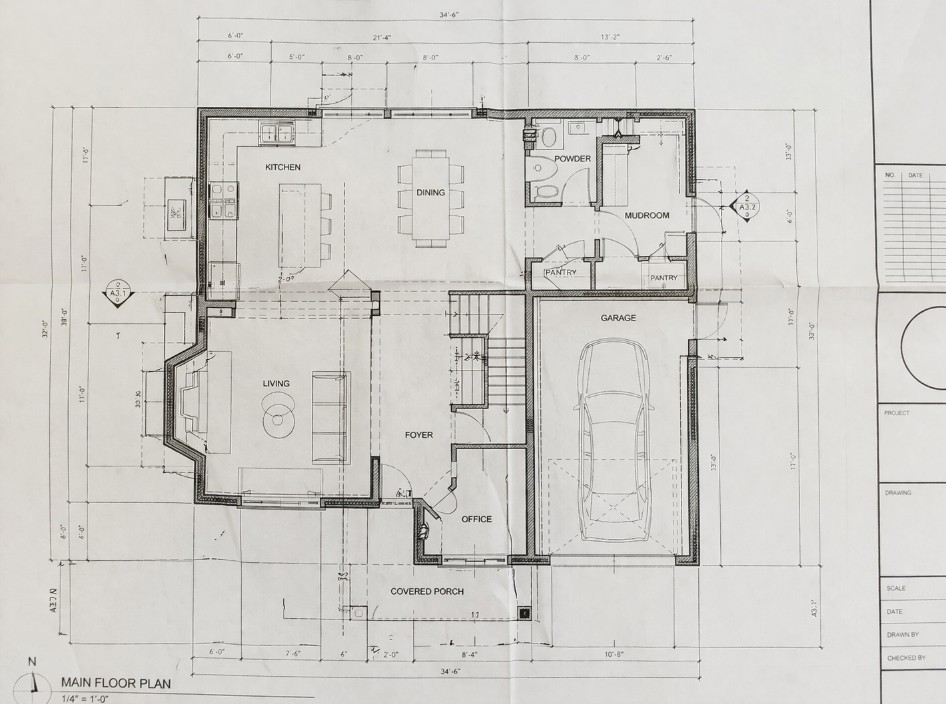
Accessible Home Renovation: What to Plan Before the Walls Close Up
Most people start a renovation thinking about layout, finishes, and budget. That makes sense. But there is another layer of decision-making that often gets missed.
What happens if life changes?
Not in a dramatic way. Just normal life. A parent staying over more often. A knee injury. Balance issues. Kids growing up. You getting older.
An accessible home renovation is not about preparing for the worst. It is about making smarter choices while the opportunity is there.
Because once the walls are closed, those opportunities get a lot more expensive.
Why renovations are the best time to think about accessibility
If you have ever helped someone adjust their home after an injury or health change, you already know the problem.
Everything becomes reactive.
Grab bars get added after a fall. Lighting gets improved after a close call. Layout problems become daily frustrations.
Renovation planning for long term living flips that.
When you are already opening walls, changing layouts, or upgrading finishes, you can quietly build in flexibility without adding much cost or complexity.
That is the core idea behind a universal design renovation. Not a different kind of home. Just a better-functioning one.
If you want a broader look at how this fits into aging in place, it’s worth reading your full planning guide:
https://goodcompanyhome.com/aging-in-place-a-completeplanning-guide/
What people regret not doing during a renovation
This is where experience really matters.
Most homeowners do not regret the tile they chose. They regret what they did not think about.
The biggest missed opportunities usually happen behind the walls or in small layout decisions:
- Not adding backing for future grab bars in bathrooms
- Not improving lighting in hallways, stairs, and entrances
- Not installing proper handrails while stairs were already being updated
- Choosing a shower with a high curb instead of a low or curbless entry
- Tight layouts that work fine now but become awkward later
These are not major upgrades. They are decisions made at the right time.
If you are thinking in terms of renovation accessibility upgrades, this is where the real value is.
Universal design does not mean clinical design
One of the biggest misconceptions is that accessibility changes how a home looks.
It does not have to.
Universal design renovation ideas are often just good design choices:
- lever handles instead of round knobs
- better, layered lighting instead of a single overhead fixture
- clean, open layouts with clear movement paths
- fixtures and supports that match your finishes
In fact, many of the same choices that make a home more accessible also make it feel more modern and easier to live in.
If you are worried about aesthetics, you are not alone. This is something I talk about more in this post:
https://goodcompanyhome.com/how-to-make-home-modifications-feel-like-empowerment-not-loss/
The most practical upgrades to think about right now
You do not need to rethink your entire renovation.
Focus on a few areas that have the biggest real-world impact.
Bathrooms
- backing for grab bars (even if you do not install them yet)
- slip-resistant flooring
- handheld shower heads
- space to move comfortably
Entrances
- sturdy handrails
- better exterior lighting
- safe, even transitions
Stairs and hallways
- consistent, bright lighting
- secure railings
- clearly visible step edges
Everyday usability
- lever-style handles
- reachable controls
- layouts that are not tight or awkward
- wider doorways and clear openings where possible
Door width is often overlooked, but it matters more than people expect. Even a small increase can make it easier to move through the home with furniture, strollers, or mobility aids, and can prevent the need for more disruptive changes later.
These are the kinds of upgrades that show up again and again in real homes and real safety assessments.
If you want a more detailed breakdown of high-impact changes, this post complements it well:
https://goodcompanyhome.com/best-home-upgrades-for-aging-parents/
You do not need a full “accessible renovation”
This is important.
Most homes do not need a full accessibility overhaul.
A future proof home renovation is usually just a standard renovation with better decisions:
- a few structural considerations
- a few safety upgrades
- a bit more space where it matters
That is it.
And those choices can prevent rushed, expensive changes later.
How to know what your home actually needs
Every home is different. Every family is different.
That is why the best starting point is not guessing. It is walking through the space and looking at how it is actually used.
Where do people hesitate?
Where is lighting weak?
Where are transitions awkward?
Where would support be needed if something changed?
That is exactly what a home safety assessment is designed to uncover:
https://goodcompanyhome.com/home-safety-assessment-toronto/
How Good Company fits into your renovation
I work with homeowners at different stages of renovation planning.
Sometimes that means:
- identifying small changes that can be built into an existing plan
- installing features like grab bars, railings, and lighting upgrades
- preparing spaces so future changes are easy
- coordinating with other trades where needed
You can explore the types of work we handle here:
https://goodcompanyhome.com/installation-services-toronto/
https://goodcompanyhome.com/home-renovations-toronto/
And once the renovation is done, ongoing upkeep matters too:
https://goodcompanyhome.com/maintenance/
Plan once, benefit for years
A renovation is already a big investment of time, money, and attention.
A few thoughtful decisions can make that investment go further.
Not by turning your home into something different.
But by making sure it continues to work for you as life changes.
That is what an accessible home renovation really is.
Not a reaction.
A quiet, practical form of planning.
About the Author
Jesse Black-Allen is the founder of Good Company, a Toronto-based home services business focused on practical safety, accessibility, and maintenance. His work centers on helping homeowners make thoughtful, well-executed improvements that make everyday living easier and homes safer over time.
Jesse works directly with clients to plan and carry out upgrades ranging from small installations to renovation-related improvements, with a focus on what actually works in real homes. He is trained, insured, and experienced in identifying risks and implementing solutions that are both functional and well integrated into the space.
If you are planning a renovation or thinking about how to make your home safer and more adaptable, Jesse is always open to a conversation.