
When something goes wrong in the bathroom or kitchen, most people default to one thought:
“I guess I need a plumber.”
And sometimes, that’s exactly right.
But a lot of the time, it leads to higher costs, longer wait times, or a job that never needed a plumbing company in the first place.
I see this constantly. And I help people work through the decision. Handyman or plumber?
A Real Example
A client once had a bathtub faucet that wasn’t working properly. The cartridge inside was stuck.
A plumbing company came out, tried for a bit, billed him for their time, and said it couldn’t be removed. The recommendation was to remove expensive tiles, open up the walls and start replacing pipes. It was going to be costly, time consuming, and disruptive.
To be fair, the cartridge was really stuck badly.
But the solution didn’t match the problem.
I knew a local guy who was strong, patient, and had a lot of experience with fixtures. I called him in for my client. It wasn’t quick or easy, but the cartridge came out. No walls opened. No pipes replaced.
Same issue. Completely different outcome.
A Practical Way to Decide
Most people don’t need a technical explanation. They just need to know who to call.
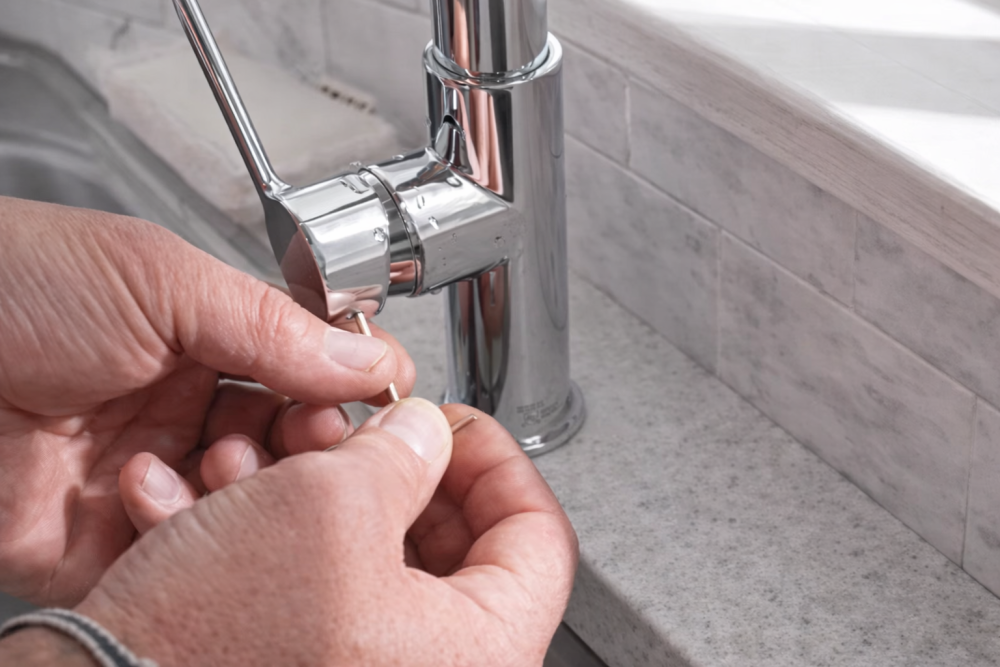
If the issue is at the surface, something like a faucet, a toilet, a visible leak, or a clogged drain, it’s often a handyman job. These are things that are already installed and just need to be repaired or replaced properly.
That usually includes:
- replacing faucets and showerheads
- installing or swapping out toilets
- clearing clogged or slow drains
- fixing minor leaks at connections
- installing dishwashers
- adding safety equipment like grab bars or handheld showerheads
This is the kind of work that comes up every day in a home.
On the other hand, once you’re dealing with the system itself, you’re into plumber territory. That means things like:
- installing or modifying water lines
- moving plumbing locations
- opening walls to access pipes
- drainage or venting issues
That’s where licensing, permits, and code start to matter.
In Toronto, anything that changes the plumbing system typically falls under permit and code requirements:
https://www.toronto.ca/services-payments/building-construction/apply-for-a-building-permit/
A Quick Note on Something Most People Don’t See: Venting
This is where things stop being “small,” even if they look that way.
Most people don’t realize that plumbing systems rely on venting. It’s not just about water moving through pipes. The system needs air to move properly as well.
When venting is missing, blocked, or done incorrectly, you start to see symptoms like slow drains, gurgling sounds, or sewer smells. People often try to fix these as surface problems, but they keep coming back because the issue is deeper in the system.
This is not something to guess at or patch over. It’s defined in the Ontario Building Code for a reason: https://www.publications.gov.on.ca/301880
If venting is involved, it needs a licensed plumber.
Why People End Up Calling a Plumber for Everything
This isn’t really about plumbing. It’s about how people find help now.
Most homeowners don’t have a trusted person they can call anymore. That role used to exist. Someone who knew the house, could handle small jobs, and knew when to bring in a specialist.
Now, people go online.
And what they find isn’t a balanced set of options. It’s a system dominated by large trade companies, paid ads, directories, and gig platforms. Those systems aren’t designed to help you think through your problem. They’re designed to capture demand and route it somewhere quickly.
So if your issue involves water, you get pushed toward a plumber.
From there, a few predictable things happen.
Sometimes the job is too small, so it gets priced high just to make it worth showing up. Other times, the solution starts drifting toward something bigger than it needs to be. Not because anyone is trying to take advantage, but because the system is built around larger, higher-value work.
There’s also a broader issue of trust. In a big city, with less reliance on referrals and more reliance on search results and reviews, people default to what feels safest. That usually means bigger companies, stronger branding, or whoever shows up first online.
But those signals don’t always match the job.
So small, practical problems get treated like major ones.
The Gap I’m Trying to Fill
Most homes don’t need more tradespeople.
They need a trusted person who knows the home, adds value over time, and knows when to call in the right trade.
That’s what I’m trying to build.
Someone who can handle fixture-level work properly, without turning it into something bigger. Someone who stays within the right scope, but also doesn’t leave you stuck trying to figure out what to do next.
And when something does need a licensed plumber, it’s clear early, not halfway through a job.
If you’re not sure what you need:
I’ll tell you honestly before starting.
So, Who Should You Call?
If the job is small, visible, and tied to fixtures or everyday use, you don’t necessarily need a plumber. Start with someone who handles that level of work properly.
If it involves the system, something behind the walls, or anything unclear beneath the surface, that’s the point where a plumber is the right call.
Related Services
Final Thought
Most problems in a home aren’t big.
They just get treated that way because there’s no one in the middle anymore.
That’s where the cost and frustration come from.
And that’s exactly the gap I’m trying to close.
About the Author
Jesse Black-Allen is the founder of Good Company, a Toronto-based home services business focused on small repairs, plumbing fixes, and safety upgrades.
His work centers on helping homeowners handle everyday issues properly and understand what kind of help they actually need.