
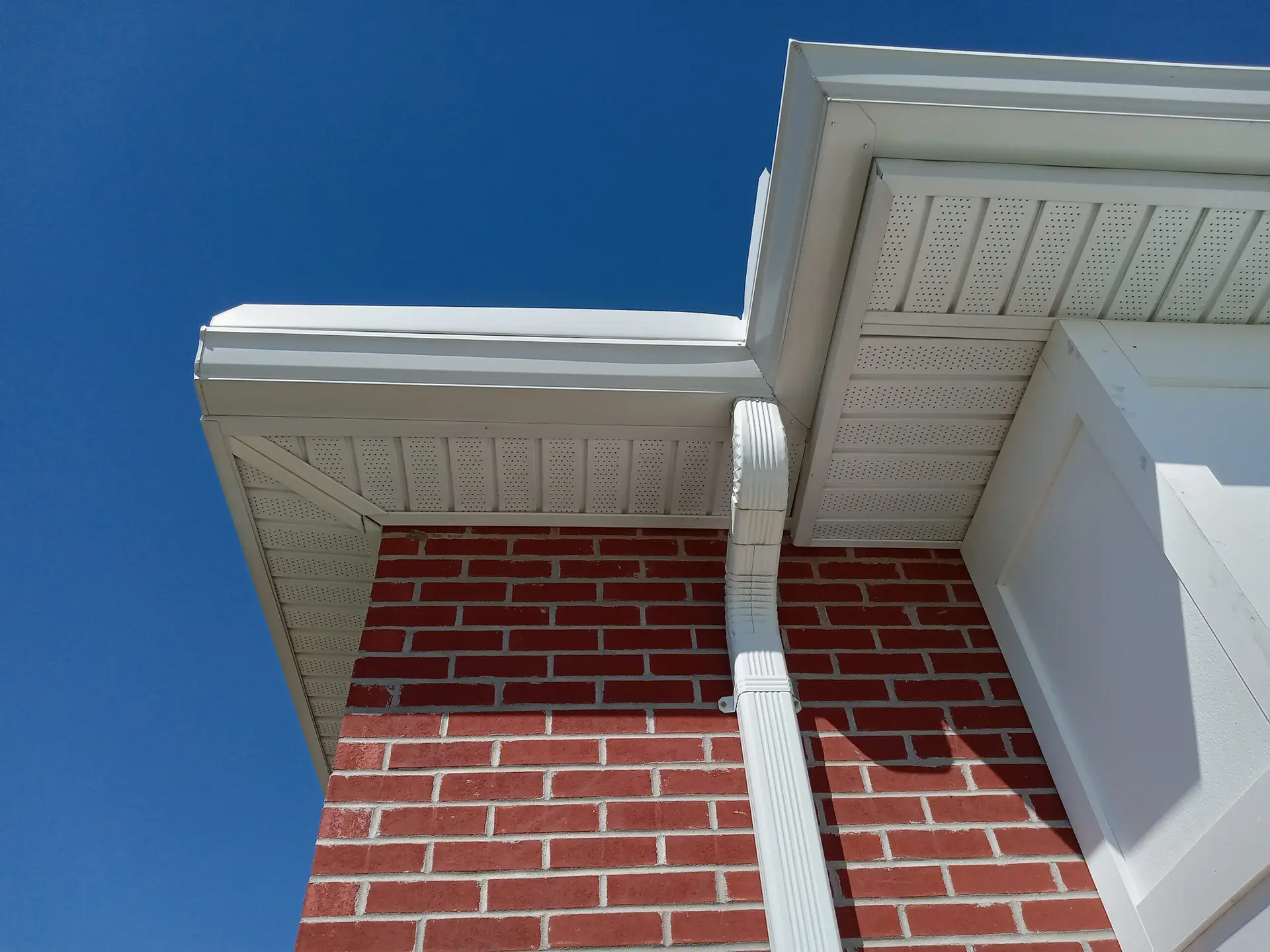
In winter, a frozen downspout is one of the most common hidden causes of water damage around older Toronto homes.
It often looks dramatic, but the real problem is what you don’t see. When water cannot move through the downspout, it backs up inside the gutter system and starts finding other places to go.
And brick, wood and foundations are very good at absorbing that water.
What a frozen downspout usually looks like
The most obvious sign is a thick vertical column of ice running down the wall below the gutter.
But there are a few quieter warning signs too:
- You see ice forming under the gutter instead of inside it.
- Water spills over the front or side of the gutter during a thaw.
- You hear dripping or running water behind the ice.
- You notice new staining on brick or siding near the downspout.
If you see ice attached directly to the wall beside the downspout, it almost always means water is escaping before it reaches the ground.
Why frozen downspouts cause real damage
When a downspout freezes solid, the system stops working exactly when you need it most.
Here’s what that leads to:
- Water backs up into the gutter.
- That water freezes again and expands.
- The weight pulls on the gutter and fasteners.
- Water spills against the wall instead of away from the house.
Over time this can cause:
- Loose or sagging gutters.
- Cracked or deteriorating mortar joints.
- Brick saturation and freeze thaw damage.
- Water intrusion around windows and flashing.
- Basement moisture and foundation wetting near the discharge area.
On older brick homes, repeated wetting and freezing is especially hard on the masonry.
Why this happens in the first place
Most frozen downspouts are not caused by bad luck.
They usually happen because of:
- Poor slope or sections that trap water.
- Too many tight elbows in the run.
- A partial blockage inside the downspout.
- Discharge lines that freeze at ground level and block the entire vertical pipe.
- A downspout that is undersized for the roof area.
Once the bottom freezes, the entire pipe becomes a solid ice column very quickly.
How to reduce the chances of freezing in the future
There is no way to make an exterior downspout completely freeze proof in a Toronto winter.
But you can dramatically reduce the risk.
The most effective prevention steps are:
- Making sure the downspout has a straight, continuous drop wherever possible.
- Reducing unnecessary bends and horizontal runs.
- Ensuring the outlet at the bottom is clear and never buried in snow or ice.
- Avoiding connections into frozen underground drains unless they are properly protected.
- Confirming the gutter itself has the correct slope so water reaches the outlet quickly
In many older homes, the original downspout layout simply was not designed for today’s freeze and thaw cycles.
What we look at when we assess a frozen downspout
When we’re called out for this type of issue, we don’t just focus on the ice.
We look at the entire water path.
That includes:
- Where the water is entering the gutter
- How fast it can move toward the outlet
- Whether the downspout alignment encourages standing water
- Where the water is being sent once it reaches the ground
- Whether nearby brick, windows or foundations are being soaked during overflow
The goal is to stop the backup before it ever becomes ice.
How we would repair this situation
In the case shown here, the most practical and reliable fix is to replace and redo the downspouts.
That means:
- Removing the existing frozen and poorly performing downspout runs
- Rebuilding the vertical and horizontal sections with cleaner alignment
- Reducing tight bends that trap water
- Correcting the outlet height and discharge direction
- Making sure water is carried well away from the wall and foundation
This approach eliminates the conditions that caused the freeze in the first place, instead of just reacting to the ice after it forms.
Why replacing the downspout is often better than trying to “fix” it
Once a downspout has repeated freeze problems, small repairs usually do not solve the underlying flow issue.
A new properly laid out run:
- Moves water faster
- Stays clearer during partial freezes
- Reduces wall wetting
- Protects brick and mortar long term
- Reduces stress on the gutter system
It is one of the simplest upgrades that delivers real protection to the building envelope.
A simple rule of thumb
If you see ice growing down your wall instead of inside your downspout, the system is already failing.
That is the moment to act, not after spring thaw reveals damaged brick, loose gutters or interior leaks.
At Good Company, we focus on correcting drainage and downspout layout so water goes where it is supposed to go
away from the home, quickly and safely.
If your downspouts freeze every winter, we can usually rebuild the run and solve it in a single visit.
About the Author
Jesse Black-Allen is the founder of Good Company, a North York-based home safety and accessibility specialist serving Toronto, Vaughan, and Richmond Hill. He helps families and homeowners improve safety, functionality, and peace of mind through practical home assessments and professional handyman support.