
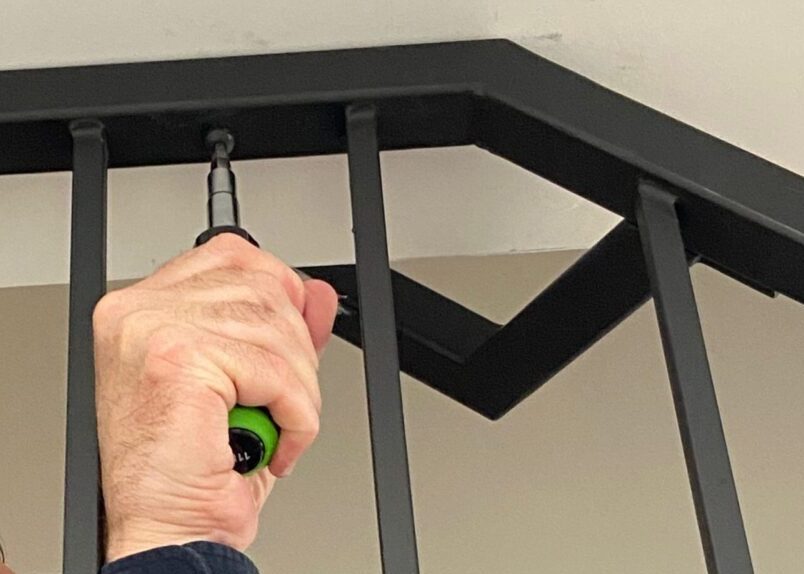
Handrail installation in Toronto homes is one of the most effective ways to reduce fall risk and improve safety on stairs and other elevated areas. Whether you want indoor handrails on basement steps or outdoor porch rails at your entry, choosing the right solution and knowing basic Ontario Building Code requirements can help protect your family and keep your home safe.
This guide explains when handrails are required, whether you should install rails on both sides, code basics from the Ontario Building Code along with options for handrail kits and custom railings. We also discuss common materials and where handrails may be beneficial beyond stairs.
When Handrails Are Required in Ontario
Under the Ontario Building Code a stairway in a private home generally needs a handrail if:
• Interior stairs have more than two risers.
• Exterior stairs have more than three risers.
• A ramp rises more than 400 mm.
• The stair or ramp is wider than about 1,100 mm, in which case handrails are required on both sides.
Source: Ontario Building Code, Division B, Part 9, Section 9.8.7 Handrails.
In simple terms most interior staircases with more than two steps benefit from at least one handrail. If the stair is wide or open on both sides then rails on both sides are safer and in some cases required by code.
Handrail Height and Graspability
The Ontario Building Code specifies that handrails on stairs and ramps must be:
• Between about 865 mm and 965 mm in height above the stair nosing or ramp surface.
• Continuous and graspable along their entire length.
• Designed so no position on the stair or ramp is more than 825 mm from a handrail.
Source: Ontario Building Code, Division B, Part 9, Section 9.8.7.
The Ontario Building Code also requires space behind the handrail so it can be properly gripped. In most cases there must be at least 50 mm of clearance between the rail and the wall, and about 60 mm if the surface behind it is rough or abrasive.
A handrail should also extend horizontally about 300 mm beyond both the top and bottom of stairs to give users stable support when beginning or ending their climb or descent.
These requirements are about safety and usability not about aesthetics. Proper handrail placement can make a significant difference in everyday use and in emergency situations.
Do You Need Handrails on Both Sides?
Not always. Ontario’s code requires at least one handrail on stairs that meet the riser requirements above. However:
• If a stairway is wider than about 1,100 mm, handrails on both sides are required.
• Even where only one rail is required by code, adding a second provides redundancy and safety, especially for older adults or people carrying items.
Whether indoors or outdoors there is no penalty for extra support. It is often recommended when someone in your household has mobility concerns.
Where Handrails Are Beneficial
Handrails are useful not only on traditional staircases. Consider adding rails:
• Basement steps where lighting may be dim and footing uneven.
• Front porch and entry steps where icy conditions create slip risk.
• Garage entry stairs or ramps connecting to your home.
• Walkouts to backyard patios or elevated decks where a guard and handrail improve safety.
• Interior steps leading to sunken living rooms or raised dining areas.
Depending on needs and preferences some clients also choose handrails along long hallways, near bedroom entrances, or in other rooms where extra stability provides confidence and support.
Handrails help people maintain balance and reduce fall risk at any transition point that involves a change of height or where extra support is beneficial.
Options for Handrails: Kits, Semi Custom, and Custom
When planning handrail installation you have three common choices:
Handrail Kits
These ready made kits include rail sections, brackets, and hardware.
Pros:
• Fast install if you need support quickly.
• Lower cost than custom fabrication.
• Good for standard stair configurations.
Cons:
• Limited style options.
• May not fit odd angles or unique stair shapes.
A quick kit install can make your stairs safer immediately. Later you can upgrade to a custom solution if desired.
Semi Custom Handrails
Semi custom rail systems use pre made components but allow for some adjustment in length, finish, or shape.
Pros:
• More design flexibility.
• Better fit for slightly unusual spaces.
Cons:
• More expensive than kits.
• Still not fully tailored.
This can be a good middle ground when you want something nicer with minimal delay.
Custom Handrails
Custom rail systems are designed and built for your exact space.
Pros:
• Perfect fit and unique aesthetics.
• Can match architectural features.
Cons:
• Higher cost.
• Longer lead time.
If you are planning a full renovation or want a statement piece custom is the way to go. For urgent needs you can install a kit first and follow up with a custom solution later.
Materials and Finishes
Handrails can be made from a variety of materials. Each has strengths depending on the application and environment.
Wood
Pros: Warm, natural look that works beautifully indoors and can also be used outdoors if properly sealed and maintained.
Cons: Requires finishing and periodic maintenance, especially outside.
Aluminum
Pros: Lightweight, corrosion resistant, excellent for outdoor use but also suitable indoors for a clean modern look.
Cons: Can feel more utilitarian depending on design.
Steel
Pros: Strong and durable, suitable for both indoor and outdoor installations.
Cons: Must be protected from rust outdoors.
Finishing matters. Powder coating, painting, staining, or sealing help protect rails from wear, moisture, and weather. Outdoors durability is critical due to rain, snow, and freeze thaw cycles. Indoors material choice is often driven more by aesthetics and grip comfort.
Your Next Steps
Proper handrail installation is not only about compliance but about everyday safety. If your home has stairs or elevations that could cause a fall risk you may want to explore solutions that match your needs and style.
For a fast safety upgrade or a complete consultation:
• Reach out via our Contact page
• We can help you handrail installs as part of an installation visit.
• We can assess, upgrade, and maintain your handrails as part of a regular maintenance package.
A properly installed handrail can make your home safer and more comfortable whether indoors or outdoors. Prioritizing support and balance helps prevent falls and gives you confidence in daily movement.
Good Company provides home safety upgrades, accessibility improvements, and reliable handyman services across Toronto, North York, Vaughan, and Richmond Hill.
If you’re looking to make your home safer, more functional, or easier to maintain, we’re here to help.
📞 416-894-1137
🌐 https://goodcompanyhome.com/contact/
Reliable help at home, trusted by families and care partners. Leann more by visiting our professional installations page and our railings page.
About the Author
Jesse Black-Allen is the founder of Good Company, a North York-based home safety and accessibility specialist serving Toronto, Vaughan, and Richmond Hill. He helps families and homeowners improve safety, functionality, and peace of mind through practical home assessments, home maintenance, and home improvements.