
Choosing an accessible renovation contractor is a little different from choosing someone for an ordinary kitchen, bathroom or basement renovation.
The construction still needs to be done properly. But there is another question that matters just as much:
Will the finished space actually work for the person who needs it?
A beautiful shower is not particularly useful if someone cannot safely get into it. A wider doorway may still be difficult to navigate if there is not enough room to approach it with a walker or wheelchair. A grab bar can be securely installed and still be in the wrong place for the person trying to use it.
The right accessible renovation contractor needs to understand both sides of the project: how to build it and what the renovation is actually supposed to accomplish.
If you are looking for an accessible renovation contractor in Toronto, here are the things I would consider.
What should I look for in an accessible renovation contractor?
There is no single credential that tells you everything you need to know.
Instead, look for a combination of professional fundamentals, evidence of relevant experience and additional accessibility knowledge.
| Level | What to look for | Why it matters |
|---|---|---|
| Essentials | Liability insurance | Renovation work carries real property and injury risks. A professional contractor should be properly insured. |
| Essentials | WSIB coverage where applicable | Particularly important when workers or subcontractors will be involved. |
| Essentials | Written scope and contract | You should understand what is being built, what it costs, what is excluded and how changes will be handled. |
| Essentials | Appropriate licences, permits and qualified trades | The contractor should understand which requirements apply and use properly qualified trades where needed. |
| Evidence | Photos of relevant projects | Look for work similar to what you actually need, not simply attractive kitchens and bathrooms. |
| Evidence | Reviews and references | Look for reliability, communication, workmanship and how unexpected problems were handled. |
| Evidence | Accessibility renovation experience | The contractor should understand how mobility and everyday use affect construction decisions. |
| Good to have | Qualified Adaptiv Home Specialist | Canadian training specifically focused on renovations for disability, changing abilities and aging in place. |
| Good to have | RenoMark membership | An additional indication of commitment to written contracts, insurance, warranties and professional renovation standards. |
| Good to have | Experience working with occupational therapists | Particularly useful when transfers, positioning or complex mobility needs affect the project. |
No single row in that table should make the decision for you.
What you are really looking for is a pattern.
Does the contractor operate professionally? Can they show relevant work? Do they understand accessibility? Do they ask sensible questions before proposing a solution?
Does the contractor actually understand accessibility renovation?
A capable general renovator can build many of the same things an accessibility project requires.
The difference is understanding how those things will actually be used.
Consider an accessible bathroom renovation.
The project may involve framing, waterproofing, plumbing, electrical work, tile and fixtures just like another bathroom renovation.
But someone also needs to think about how the person enters the room, approaches the toilet, gets into the shower, reaches the controls and moves through the available space.
That is where relevant accessibility experience becomes important.
Can this bathroom be made easier to use without completely renovating it?
Sometimes it can.
Difficulty getting into a bathtub might be addressed with a grab bar, transfer bench, handheld shower or bathtub cutout.
A toilet that has become difficult to use may be raised or replaced.
Poor support around the shower or toilet may sometimes be addressed without reconstructing the room.
In other situations, those smaller interventions are no longer enough and a larger bathroom renovation makes sense.
The important thing is to start with the problem rather than automatically starting with demolition.
Do we actually need a curbless shower?
Maybe.
Curbless showers can be excellent accessibility features, particularly when wheelchair access or significant difficulty stepping over a threshold is involved.
But a curbless shower is not automatically the best solution for every person or every house.
For one client, a properly designed low threshold shower may accomplish everything that is required with considerably less disruption.
For another, even a small threshold may create an important barrier.
Existing floor construction, drainage, available space and the person’s mobility all matter.
The contractor should be interested in why the threshold matters before deciding what needs to be built.
Will a walker or wheelchair actually fit through this doorway?
Door width matters, but it is not the entire problem.
Someone using a walker or wheelchair also has to approach the opening, pass through it and manoeuvre on the other side.
A doorway can be wide enough on paper and still be awkward because of a nearby wall, vanity, toilet or sharp change in direction.
This is one reason accessibility renovation cannot always be reduced to a list of dimensions.
The measurements matter. So does the way the space actually works.
Where should grab bars go in a renovated bathroom?
It depends on how they will be used.
Someone who needs occasional balance support may use a bathroom very differently from someone who transfers from a wheelchair.
Another person may need assistance from a family member or personal support worker.
During a bathroom renovation, there is also an opportunity to install substantial reinforcement behind the finished walls.
That can provide much greater flexibility for current and future grab bar placement and may prevent walls from having to be opened again later.
Is a ramp really the best solution for the front steps?
Sometimes.
Not always.
The total rise, amount of available property, landing configuration, mobility device and expected use can all affect the answer.
At one house, a ramp may be straightforward.
At another, the required ramp would be surprisingly long and a platform lift may make more sense.
In another situation, reconstructed steps and better handrails may adequately address the actual difficulty.
The point is not that one solution is better.
The contractor should be willing to consider the options before deciding which solution makes sense.
Should I hire an accessibility specialist or a regular renovation contractor?
For straightforward construction work, a good renovation contractor may have all the technical skills required.
Accessibility experience becomes increasingly valuable as the person’s needs become more specific.
Relevant work might include:
• Accessible bathroom renovations
• Tub to shower conversions
• Curbless and low threshold showers
• Grab bar installation and reinforcement
• Door widening
• Threshold removal
• Ramps and accessible entrances
• Handrails and stair modifications
• Walker and wheelchair circulation
• Preparation for stairlifts or platform lifts
• Home modifications following hospital or rehabilitation discharge
You do not necessarily need someone who has completed hundreds of identical projects.
You do want a contractor who understands why the project is different from an ordinary cosmetic renovation.
What is a Qualified Adaptiv Home Specialist?
Adaptiv Home is a Canadian Home Builders’ Association program focused specifically on renovations for people living with disabilities, progressive conditions or changing abilities, as well as people who want to remain in their homes as they age.
A Qualified Adaptiv Home Specialist has successfully completed the CHBA Adaptiv Home Renovation Course and meets the program requirements.
The training covers construction topics including ramps and slopes, zero step thresholds, curbless showers, accessibility equipment and home automation.
It also addresses Canadian codes and standards, client communication, privacy and understanding the needs of people whose abilities may change over time.
That combination is valuable because accessible renovation sits at the intersection of construction and the way people actually live in their homes.
A qualification should never replace checking insurance, references, previous work and general competence.
It is additional evidence that the contractor has deliberately developed knowledge in accessible renovation.
Do I need an occupational therapist for an accessibility renovation?
Not always. Many accessibility projects are relatively straightforward.
Adding a second handrail, installing grab bars, eliminating a troublesome threshold or making a simple bathroom modification may not require a clinical assessment.
Other situations are more complicated.
For example:
How should someone transfer from a wheelchair to the toilet?
What shower arrangement would work best following a stroke?
Where should supports be positioned when strength or balance differs significantly from one side to the other?
How much room does a caregiver need to provide assistance safely?
Are someone’s mobility needs likely to change because of a progressive condition?
These are situations where an occupational therapist can add significant value.
The roles are different.
An occupational therapist can assess the person’s functional needs and how they interact with the home.
The contractor understands how a proposed solution can actually be constructed within that home.
When a project involves complex mobility, transfers or positioning, the best result may come from the contractor and occupational therapist working together.
What questions should an accessibility renovation contractor ask me?
One of the easiest ways to evaluate a contractor is to notice what they want to know before recommending anything.
They should certainly ask ordinary renovation questions about budget, finishes, timing and the existing house.
Accessibility work should prompt some additional questions.
What is becoming difficult to do in the home?
This can be much more useful than beginning with, “What renovation do you want?”
The problem may be getting into a bathtub, standing in the shower, getting on and off the toilet, entering the house, using the stairs or navigating a narrow doorway.
Different problems call for different solutions.
Is this for a current need or are you planning ahead?
A renovation for someone returning from hospital next week may require a different approach from a project intended to make a home work better over the next twenty years.
Does anyone use a walker, wheelchair or other mobility device?
That can affect much more than doorway width.
Routes through the home, turning space, thresholds, fixture placement and approaches to doors may all matter.
Is getting into the shower the problem, or is standing once inside the shower the problem?
Those are different problems.
One may point toward reducing or eliminating a threshold.
The other may be better addressed with a seat, supports and a handheld shower.
Sometimes both need to be addressed.
Is someone helping with bathing, transfers or stairs?
The space may need to work for both the person receiving assistance and the person helping them.
Has an occupational therapist or physiotherapist made recommendations?
If recommendations already exist, the contractor should be willing to review and implement them rather than automatically starting from scratch.
Are the person’s needs likely to change?
Nobody can predict the future perfectly.
But if substantial renovation work is already being done, it makes sense to consider what can reasonably be prepared now.
These questions move the conversation away from selling a particular product and toward solving the actual problem.
Can an accessible renovation still look like a normal home?
Absolutely.
Accessibility does not require making a home look institutional.
In fact, thoughtful planning can often make accessibility features almost invisible.
Grab bars are available in finishes that coordinate with other bathroom hardware.
A curbless or low threshold shower can simply look like a well designed shower.
Wider openings can feel spacious rather than medical.
Reinforcement for future grab bars can remain completely hidden behind finished walls.
Lever hardware, better lighting and smoother flooring transitions can benefit almost everyone without looking like accessibility equipment.
The goal is a home that works better.
It does not need to advertise why.
Should an accessibility contractor suggest less expensive options?
I think so.
Accessibility work should not begin with the assumption that the biggest renovation is automatically the best solution.
Consider a bathtub that has become difficult to enter.
Depending on the person and the bathroom, possible solutions might include:
• A grab bar and bath seat
• A transfer bench
• A bathtub cutout
• A low threshold shower
• A curbless shower
• A larger bathroom reconstruction
Those solutions are not interchangeable.
But neither does every bathtub problem require demolishing the bathroom.
The same applies elsewhere in the home.
Difficulty using stairs might be addressed with another handrail, better lighting, modifications to the stairs, a stairlift, a platform lift or eventually reorganizing the home so essential living spaces are on one level.
A useful question to ask is:
What is the simplest solution that adequately addresses the problem?
Sometimes the answer will still be a substantial renovation.
That is perfectly reasonable.
You just want to arrive there because the larger renovation is actually appropriate.
Should I plan for future accessibility while renovating now?
Usually, yes.
This is particularly worthwhile when walls and floors are already being opened.
Some of the easiest accessibility improvements to make during a renovation are the ones you cannot see afterward.
Bathroom wall reinforcement is a good example.
Installing appropriate reinforcement before the walls are closed can make future grab bar placement considerably easier.
Other things worth considering may include:
• Door widths
• Flooring transitions
• Shower thresholds
• Shower seating
• Reachable controls
• Lighting
• Space around fixtures
• Electrical requirements for future equipment
• Routes through the home
This does not mean trying to predict every possible future medical condition.
It means avoiding unnecessary barriers and taking advantage of relatively inexpensive opportunities while construction is already underway.
Who should perform the plumbing and electrical work?
Accessible renovations frequently involve more than one trade.
A bathroom renovation might involve carpentry, tile, waterproofing, plumbing and electrical work.
An accessible entrance might involve excavation, concrete, carpentry, railings and sometimes electrical work for equipment such as a platform lift.
There is nothing unusual about a renovation contractor coordinating qualified trades.
What matters is that you know who is responsible for the work and that work requiring specialized or regulated trades is handled appropriately.
You should be able to ask:
Who is doing the plumbing?
Who is doing the electrical work?
Are those costs included in the quote?
Who coordinates the trades if something changes?
The answers should be straightforward.
Does an accessibility renovation require a building permit in Toronto?
Some projects do and some do not.
The answer depends on what is actually being changed.
Installing a grab bar is very different from altering structural framing or significantly reconstructing part of a house.
For a homeowner, the useful question is simply:
Does this particular project require a permit, and if it does, who is responsible for it?
That should be considered during planning rather than becoming a surprise after construction begins.
You do not need to become an expert in municipal regulation before calling a contractor.
You want a contractor who recognizes when permits or specialized trades need to be part of the conversation.
What should be included in an accessibility renovation quote or contract?
The amount of detail should increase with the size and complexity of the project.
For a substantial renovation, the written proposal or contract should make the important parts of the project reasonably clear.
That can include:
• Scope of work
• Significant exclusions
• Fixtures and materials
• Who supplies particular products
• Subcontracted work
• Permit responsibilities where applicable
• Price and payment schedule
• Expected project schedule
• How changes will be approved and priced
• Warranty terms
Accessibility projects can evolve considerably during planning.
Someone may initially call asking for a walk in shower and discover that a smaller modification is sufficient.
The opposite can happen too.
What initially sounds like a simple shower conversion may reveal issues involving drainage, floor structure, doorway width or the overall bathroom layout.
Before construction begins, everyone should understand what has actually been agreed to.
What is RenoMark, and does it matter?
RenoMark is a Canadian Home Builders’ Association program for professional renovation contractors who agree to follow a renovation specific Code of Conduct.
Its requirements include a detailed written contract, appropriate licences and permits, at least $2 million in liability insurance, workplace safety coverage and a minimum two year warranty, subject to program conditions.
I would not choose a contractor solely because of a RenoMark logo.
It is better understood as another useful piece of evidence that a renovation company has committed to established professional practices.
The same principle applies to Adaptiv Home training.
Credentials provide evidence.
They do not replace good work.
What should I ask to see before hiring an accessible renovation contractor?
Ask to see work that is actually relevant to your project.
If you need a ramp, ask to see ramps.
If you are planning an accessible bathroom, look for bathrooms where accessibility features were actually incorporated.
If you have an older Toronto home with narrow spaces, difficult stairs or unusual construction, experience solving those kinds of problems is particularly useful.
Also read the reviews carefully.
Look for comments about:
• Communication
• Reliability
• Showing up when expected
• Cleanliness
• Respect for the home
• Quality of workmanship
• Clarity around pricing
• How unexpected problems were handled
• Whether the client felt listened to
Renovation work happens in people’s homes.
Accessibility renovation also sometimes happens during particularly stressful periods following an injury, illness or hospital stay.
How the contractor works with people matters.
What are the red flags when hiring an accessibility contractor?
I would be cautious if a contractor:
• Cannot provide proof of insurance
• Will not provide a clear written scope for significant work
• Is vague about who will actually perform specialized work
• Cannot show or discuss relevant previous projects
• Shows little interest in how the person will use the finished space
• Treats every accessibility problem as requiring the same solution
• Automatically recommends the largest available renovation
• Dismisses an occupational therapist or other professional’s recommendations without a sensible reason
• Cannot explain how important supports or equipment will be secured
• Pressures you into making a major decision immediately
Price matters.
But comparing accessibility renovation quotes only by the number at the bottom can be misleading when the proposed solutions are not actually the same.
How do I choose the right accessible renovation contractor?
I would look for three things together.
Professional fundamentals
Insurance, proper business practices, a clear agreement and the right people doing the work.
Evidence
Relevant photographs, reviews, references and examples of similar problems the contractor has solved.
Understanding
Does the contractor understand why you are making the modification in the first place?
That final point is what distinguishes accessible renovation from renovation that simply happens to include an accessible product.
The goal is not to create a room that checks boxes.
The goal is to make the home easier, safer and more workable for the people who live there.
Sometimes that requires a substantial renovation.
Sometimes the right answer is much smaller.
A good accessible renovation contractor should be comfortable with either outcome.
Accessible Renovations in Toronto with Good Company
Good Company provides accessibility modifications and small to medium residential renovation projects in Toronto and surrounding communities.
Our work includes bathroom accessibility improvements, grab bars, handrails, entrances, ramps, post discharge home modifications and related renovation work.
Good Company carries commercial liability insurance and WSIB coverage and is licensed by the City of Toronto as a Building Renovator.
Jesse Black Allen is also a Qualified Adaptiv Home Specialist through the Canadian Home Builders’ Association.
We work with occupational therapists, physiotherapists and other professionals when their expertise can improve the outcome of a project.
Our approach is to start with what someone is having difficulty doing, understand the home and then consider the practical options.
That may lead to a larger renovation.
It may also reveal that a much simpler modification will do exactly what is needed.
If you are considering an accessibility renovation but are not yet sure what the solution should look like, that is a perfectly reasonable place to start.
Frequently Asked Questions
What should I look for in an accessibility renovation contractor?
Look for a combination of professional fundamentals and relevant experience. That includes liability insurance, appropriate workplace safety coverage, clear written agreements, good reviews and examples of similar accessibility work. Additional training such as the Qualified Adaptiv Home Specialist designation can also be useful.
Should I hire an accessibility specialist or a regular contractor?
A capable general renovator may be able to perform the construction itself. Accessibility specific experience becomes more important when the project involves mobility devices, transfers, specialized equipment, future planning or complex use of the space.
What is a Qualified Adaptiv Home Specialist?
A Qualified Adaptiv Home Specialist is a professional who has successfully completed the Canadian Home Builders’ Association’s Adaptiv Home Renovation Course and meets the program requirements. The training focuses specifically on renovating homes for disability, changing abilities and aging in place.
Do I need an occupational therapist for an accessibility renovation?
Not always. Many straightforward modifications can be planned without an occupational therapist. OT involvement can be particularly valuable when transfers, neurological conditions, significant mobility limitations or caregiver assistance affect the design.
Can an accessible renovation still look attractive?
Yes. Accessibility and good residential design are entirely compatible. Many accessibility features can be integrated into a home without making it look clinical or institutional.
Should an accessibility contractor suggest smaller alternatives to a full renovation?
Yes. The goal should be to identify an appropriate solution to the problem rather than automatically recommending the largest project. Sometimes a modest modification is enough. In other situations, a substantial renovation is justified.
Does an accessibility renovation require a building permit in Toronto?
It depends on the scope. Many smaller modifications do not require a building permit, while structural alterations and larger renovation work may. Your contractor should identify permit requirements during planning.
Is RenoMark required for accessibility renovations?
No. RenoMark is a voluntary professional renovation program. Membership can provide additional evidence of professional practices, but it is not a requirement for performing accessibility renovation work.
About the Author
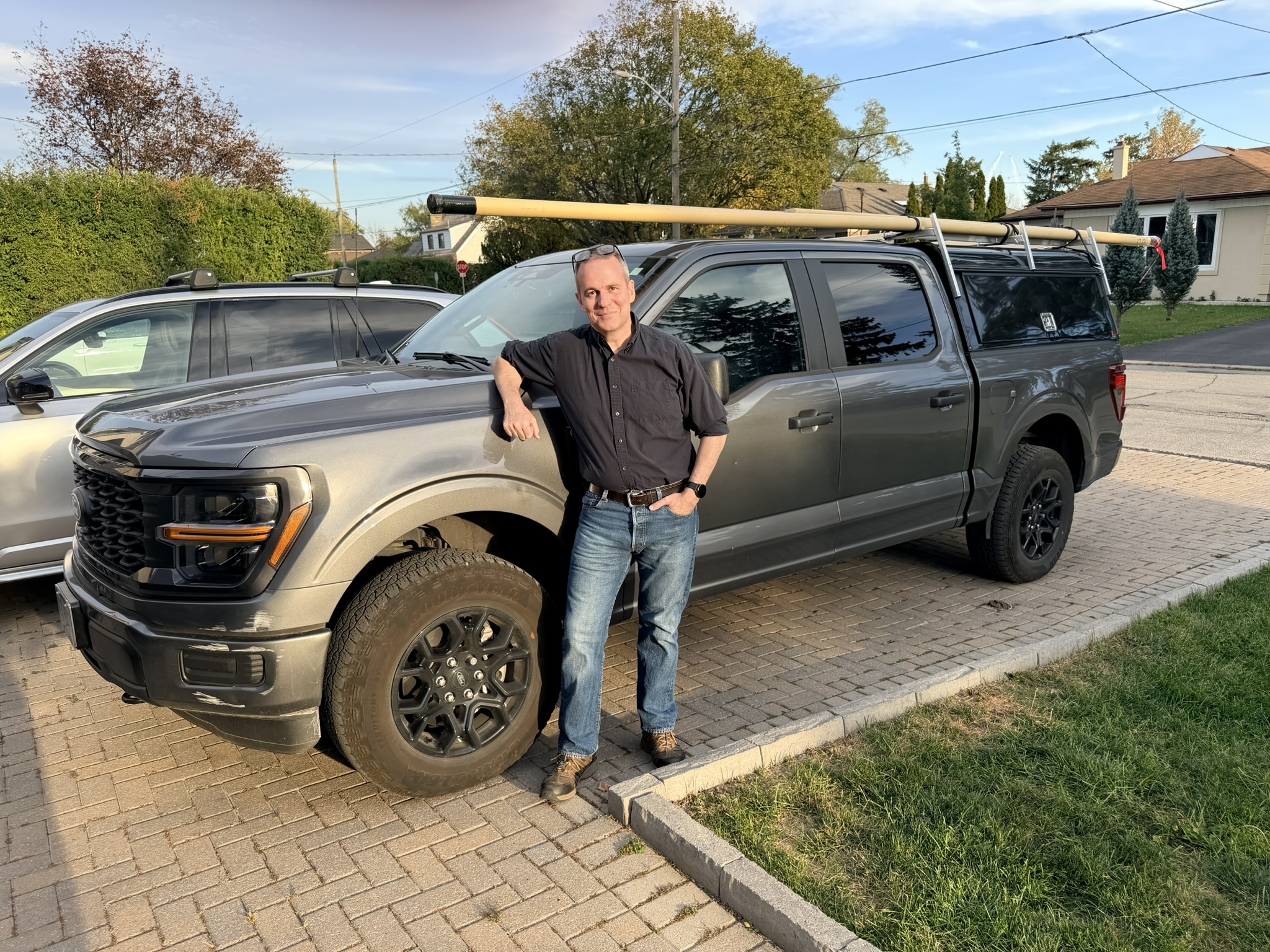
Jesse Black Allen is the founder of Good Company, a Toronto home renovation and accessibility services company. He is a City of Toronto licensed Building Renovator and a Qualified Adaptiv Home Specialist through the Canadian Home Builders’ Association, with a focus on practical home modifications that support safety, mobility and aging in place.